
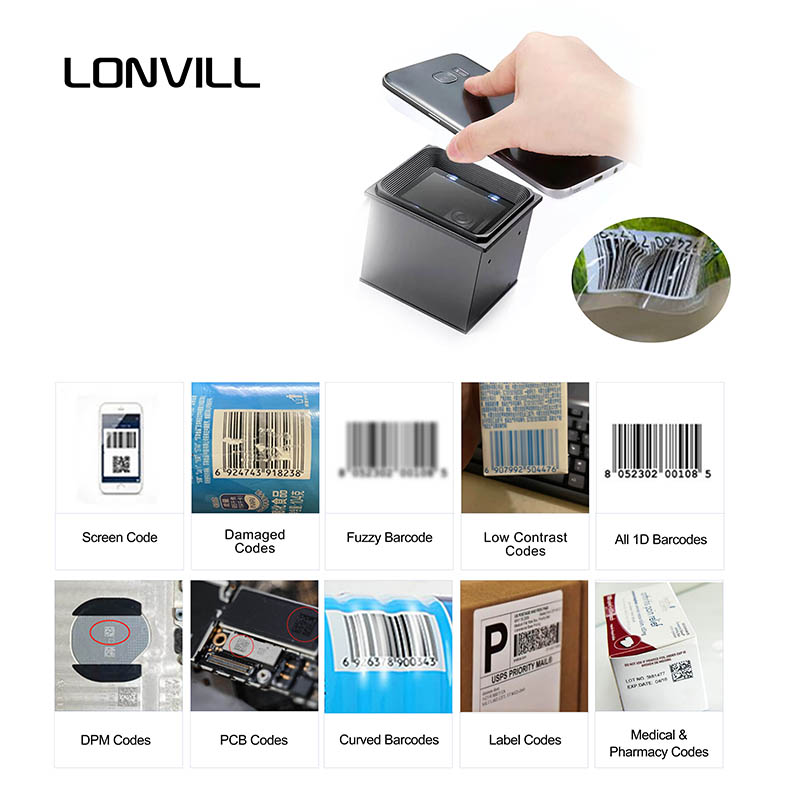
As technology advances toward seamless connectivity, the way businesses handle data capture and automation continues to evolve. Wireless communication has transformed how devices interact, offering freedom from cables and greater mobility. Tuy nhiên, in this fast-paced transition, an important question arises: Are USB QR code scanners still relevant in a wireless era?
For companies in retail, hậu cần, manufacturing, and healthcare, the answer is not as simple as it may seem. While wireless scanners promise flexibility, Máy quét mã QR USB still deliver unmatched stability, compatibility, and performance in high-demand environments. The continued adoption of wired scanners highlights a deeper truth — connectivity alone does not define efficiency.
The Enduring Appeal of USB QR Code Scanners
Despite the growing popularity of wireless technologies such as Bluetooth and Wi-Fi, USB QR code scanners maintain a strong foothold in global markets. These devices connect directly to PCs, Thiết bị đầu cuối POS, kiốt, or industrial controllers through a physical cable, ensuring a stable and interference-free data connection.
The appeal of USB scanners lies in three main advantages:
-
Reliability in data transmission — They are not affected by wireless interference, signal loss, or network congestion.
-
Plug-and-play convenience — Most USB scanners require no configuration or pairing, offering instant readiness.
-
Power efficiency — USB ports provide both data and power, eliminating the need for batteries or separate charging.
For mission-critical applications where downtime or data loss is unacceptable, such as payment terminals or production lines, these advantages make USB scanners the most dependable choice.
 Wired vs. Wireless: A Practical Efficiency Comparison
When evaluating scanning technology, it is essential to consider real-world operating conditions rather than theoretical flexibility. Wireless systems are appealing for mobile use cases, but their efficiency often depends on battery life, signal strength, and pairing stability.
By contrast, Máy quét mã QR USB excel in environments demanding continuous, uninterrupted scanning — such as supermarket checkout counters, ticketing systems, and manufacturing inspection lines. Their steady performance and minimal latency make them ideal for high-frequency data capture.
In industrial automation, milliseconds matter. USB-connected scanners maintain consistent speed and accuracy, unaffected by electromagnetic interference or network disruptions that may impact wireless devices. This reliability directly translates into higher throughput and reduced operational costs.
Technological Evolution: USB Scanners Are Not Static
One common misconception is that USB scanners represent an outdated technology. In reality, modern USB QR code scanners have evolved significantly. Leading manufacturers now integrate advanced CMOS imaging sensors, AI-based decoding algorithms, Và multi-symbology recognition capabilities that handle QR, Ma trận dữ liệu, and even micro-barcodes with remarkable speed.
Hơn thế nữa, USB scanners today often include firmware upgradability, programmable trigger modes, Và enhanced environmental sealing, allowing them to compete with the sophistication of wireless models. They also support USB-C interfaces, offering faster communication and universal compatibility with modern hardware.
This evolution demonstrates that wired scanning solutions continue to adapt to new demands while preserving their core advantage — reliability.
Industrial and Commercial Use Cases
Retail and Point-of-Sale (POS)
In high-traffic retail environments, reliability takes precedence over mobility. USB QR code scanners ensure every transaction is captured instantly without delay or pairing issues. They integrate seamlessly with POS systems and require minimal maintenance.
Retailers value the stability and plug-and-play setup of USB scanners, which minimize downtime during peak business hours. Hơn thế nữa, since power is supplied directly through the USB interface, there is no need for recharging or battery management — a practical advantage in 24/7 retail operations.
Manufacturing and Assembly Lines
In industrial settings, vibration, dust, and electromagnetic interference can severely affect wireless communication. USB scanners offer a robust and interference-resistant connection, critical for process automation, product verification, and parts tracking.
Many modern production systems rely on embedded scanning modules directly connected via USB to controllers or industrial PCs. These scanners form the foundation of traceability and quality assurance systems, where any data error could disrupt entire production cycles.
Healthcare and Laboratory Applications
In hospitals and laboratories, precision and hygiene are non-negotiable. USB QR scanners provide consistent scanning accuracy for patient wristbands, specimen labels, and medication verification. Their wired connection reduces wireless signal interference, which can be crucial in environments with sensitive electronic equipment.
Hơn nữa, wired scanners can be sterilized and sealed, preventing contamination risks while maintaining full functionality in sterile zones.
Kiosks and Self-Service Terminals
Public-facing kiosks — from airport check-ins to smart lockers — rely heavily on USB-embedded scanner modules. Since these terminals are often unmanned, USB scanners offer maintenance-free operation, stable power, and continuous readiness without requiring wireless setup or manual pairing.
The Energy Efficiency Factor
Energy efficiency has become a growing concern in modern device ecosystems. Wireless scanners consume power for both data transmission and internal communication protocols. They require frequent charging or battery replacements, which increases maintenance and environmental waste.
In contrast, Máy quét mã QR USB draw minimal power directly from the connected host device. This not only simplifies installation but also supports sustainable and low-maintenance operations. Over time, the total cost of ownership (TCO) of wired scanners remains significantly lower than that of battery-powered wireless models.
Security and Data Integrity
In industries handling confidential or regulated data, such as finance or healthcare, data security is a critical factor. Wireless communication introduces potential vulnerabilities such as unauthorized interception or pairing errors.
A USB connection, by contrast, forms a direct and closed communication loop between the scanner and host system. There is no risk of external interference, making USB QR code scanners inherently secure for transmitting sensitive data such as payment information, ID credentials, or medical records.
With cybersecurity becoming a key component of enterprise infrastructure, many organizations continue to favor wired scanning devices for peace of mind and compliance assurance.
Integration with Modern Systems
Modern computing infrastructure is more diverse than ever. From embedded Linux terminals to Windows-based POS systems and industrial controllers running on ARM processors, device compatibility has become a primary consideration.
USB scanners stand out for their universal interface compatibility. Most models function as standard HID (Human Interface Device) or virtual COM port devices, requiring no additional drivers. This plug-and-play characteristic allows seamless deployment across multiple operating systems and hardware platforms.
In contrast, wireless scanners often require custom software, pairing protocols, or firmware updates, which can complicate large-scale deployments. In enterprise contexts, where hundreds of devices must integrate flawlessly, simplicity is invaluable — and USB technology delivers precisely that.
 Cost Efficiency and Maintenance Simplicity
From a financial standpoint, USB scanners provide long-term value. Their lower purchase cost, combined with minimal maintenance, makes them a practical choice for businesses managing tight operational budgets.
Wireless systems incur hidden costs — from battery replacements and charging infrastructure to potential data downtime due to connection drops. Over time, these factors can erode the expected benefits of wireless freedom.
Because USB scanners operate continuously without the need for manual intervention, they reduce the burden on IT departments and improve overall workflow consistency.
Environmental and Operational Considerations
In high-volume operations, every watt of power and every second of uptime counts. Máy quét mã QR USB consume less energy, generate minimal heat, and can operate for years without degradation. Their durability makes them suitable for 24/7 usage in harsh environments.
From an environmental standpoint, fewer battery replacements and longer device lifespans translate to reduced electronic waste. As global industries adopt more sustainable practices, wired scanning solutions continue to align with eco-friendly operational standards.
Why USB Technology Still Matters
It’s easy to assume that wireless technology will completely replace wired devices. Yet history repeatedly shows that efficiency, reliability, and precision often outweigh trends in connectivity. The continued global demand for Máy quét mã QR USB underscores their vital role in applications where performance cannot be compromised.
While wireless systems thrive in mobile and low-volume environments, USB scanners dominate wherever continuous, stable operation is paramount. Their role extends far beyond legacy support — they represent a refined, optimized technology that continues to evolve alongside innovations.
Phần kết luận: Sustained Relevance in a Connected World
As industries embrace automation, IoT, and AI-driven logistics, data capture technology remains the bridge between the physical and digital worlds. Máy quét mã QR USB continue to play a crucial role in this ecosystem — offering the stability, Độ chính xác, and cost-efficiency that wireless alternatives have yet to surpass completely.
Rather than being replaced, USB scanners are evolving in parallel with wireless advancements, adapting to modern standards while preserving the core benefits that made them indispensable. Their sustained relevance lies in their reliability under pressure, security in transmission, Và efficiency in demanding workflows.
In a wireless era, the wired connection still represents something invaluable: certainty. And in business, certainty is power.


Để lại một câu trả lời