

Компакт barcode reading engines have become essential components across modern industries. Они питают портативные сканеры, стационарные промышленные считыватели, Киоски, медицинское оборудование, and embedded OEM systems. As devices shrink and integration demands increase, expectations for speed, accuracy, and reliability continue to rise. However, despite rapid advances in imaging sensors and processing technology, compact barcode reading engines still face inherent performance limitations. These limitations arise from physical constraints, environmental factors, optical design tradeoffs, and processing boundaries. Understanding these constraints helps system designers select the right engine and optimize overall scanning performance.
The Growing Demand for Compact Barcode Reading Engines
Barcode reading engines now operate in far more environments than traditional retail counters. They serve logistics hubs, manufacturing lines, healthcare workflows, transportation systems, and smart terminals. As equipment becomes thinner and lighter, embedded scanning modules must deliver high performance within minimal space. Designers expect compact barcode reading engines to decode damaged barcodes, operate under poor lighting, and scan from varying distances. These expectations push the limits of physics, электроника, and software optimization. While technology evolves quickly, fundamental constraints remain unavoidable.
Optical System Size as a Core Limitation
Optics form the foundation of every barcode reading engine. Compact designs restrict lens diameter, focal length, and optical path depth. Smaller lenses collect less light, which directly impacts image quality. Reduced light intake increases noise, especially in low illumination environments. As a result, decoding performance declines when scanning low-contrast or reflective barcodes.
Кроме того, short focal lengths limit the depth of field. Compact barcode reading engines struggle to maintain focus across wide scanning ranges. This limitation becomes critical in applications requiring both near-field and long-distance scanning. Although multi-lens systems can extend capability, size constraints often prevent their use. Therefore, optical limitations remain a primary performance boundary.
 Sensor Resolution Versus Physical Size
Image sensors translate optical input into digital signals. Compact barcode reading engines typically rely on small CMOS sensors. While sensor technology improves steadily, pixel size still matters. Smaller pixels capture less light and produce weaker signals. This affects decoding accuracy, especially for dense 2D barcodes or poorly printed symbols.
Increasing sensor resolution can improve detail recognition, but higher resolution also demands more processing power. Compact engines must balance sensor resolution against thermal output and energy consumption. Excessive resolution introduces latency and heat buildup. Thus, sensor size and resolution create a constant tradeoff between clarity and efficiency.
Processing Power Constraints in Embedded Systems
Barcode decoding relies heavily on image processing algorithms. These algorithms correct distortion, enhance contrast, and decode symbol patterns. Compact barcode reading engines use embedded processors with limited computational capacity. High-speed decoding requires rapid image analysis, but compact processors cannot match the power of larger systems.
When processing capacity reaches its limit, decoding speed slows. This delay affects real-time scanning applications such as conveyor sorting or automated inspection. Designers can optimize algorithms, but hardware limits remain. As barcode complexity increases, processing constraints become more pronounced.
Power Consumption and Energy Efficiency Limits
Many compact barcode reading engines operate in battery-powered devices. Energy efficiency becomes critical in handheld scanners and mobile terminals. High-performance scanning demands more power for illumination, sensing, and processing. However, battery capacity and thermal limits restrict power availability.
Engine designers must reduce illumination intensity or processing frequency to conserve energy. These adjustments reduce scanning robustness under challenging conditions. Power management strategies help balance performance and runtime, but they also impose unavoidable limits on peak capability.
Illumination System Restrictions
Illumination plays a vital role in barcode reading. Compact barcode reading engines use LEDs or laser diodes to illuminate barcodes. Size constraints limit the number and intensity of light sources. Insufficient illumination causes poor image contrast, especially on glossy or dark surfaces.
Uniform illumination also becomes difficult in small designs. Uneven lighting creates shadows and reflections that interfere with decoding. While advanced optics and diffusers improve consistency, physical space limits their effectiveness. Illumination design, therefore, remains a major performance bottleneck.
Environmental Interference and Real-World Conditions
Barcode reading engines rarely operate in controlled laboratory environments. Пыль, vibration, temperature variation, and moisture all affect performance. Compact engines offer limited shielding due to size constraints. Vibrations can misalign optical components and introduce motion blur.
Temperature extremes alter sensor sensitivity and electronic stability. High humidity affects lens clarity and illumination output. Although ruggedized designs mitigate some risks, compact barcode reading engines remain more vulnerable to environmental interference than larger industrial scanners.
Barcode Quality and Print Variability
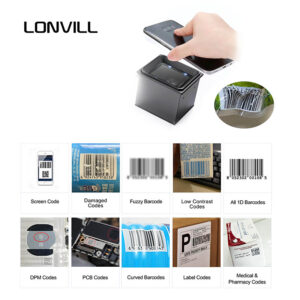
Barcode reading performance depends heavily on barcode quality. Compact barcode reading engines face challenges when decoding low-contrast, поврежден, or poorly printed symbols. Limited optics and processing headroom reduce tolerance for defects.
High-density barcodes require precise alignment and resolution. When print quality falls below acceptable thresholds, compact engines struggle more than full-sized readers. While software correction helps, hardware constraints restrict error recovery capability.
Motion Tolerance and Scan Speed Limits
Modern applications demand fast scanning of moving objects. Motion tolerance depends on sensor frame rate, illumination timing, and processing speed. Compact barcode reading engines face limits in all three areas. Lower frame rates increase motion blur. Reduced illumination intensity weakens image clarity.
As a result, high-speed scanning becomes less reliable. Engineers can optimize shutter timing and decoding algorithms, but physical constraints limit achievable motion tolerance. This affects conveyor-based and robotic scanning systems.
 Field of View Versus Resolution Tradeoffs
The field of view defines how much area the engine captures. A wider field of view supports flexible scanning angles but reduces effective resolution. Compact barcode reading engines must choose between coverage and detail. Narrow fields improve resolution but reduce usability.
This tradeoff becomes critical in applications requiring omnidirectional scanning. Designers often compromise to balance performance across varied use cases. However, this compromise inherently limits peak performance in any single dimension.
Firmware and Algorithm Optimization Boundaries
Software optimization improves decoding efficiency. However, firmware cannot overcome physical limitations entirely. Advanced algorithms require processing power and memory. Compact engines offer limited resources.
As barcode symbologies evolve, decoding complexity increases. Supporting new standards consumes additional resources. Eventually, firmware optimization reaches diminishing returns. Hardware constraints then define the upper performance ceiling.
Reliability Versus Performance Tradeoffs
High-performance operation accelerates component wear. Compact barcode reading engines must balance speed against long-term reliability. Aggressive illumination and processing shorten lifespan. Conservative operation extends durability but limits performance.
Manufacturers often prioritize stable performance over peak benchmarks. This approach ensures consistent operation across extended usage cycles. However, it also caps maximum achievable performance in demanding scenarios.
Заключение: Understanding Limits Enables Better Design
Compact barcode reading engines deliver remarkable performance within constrained form factors. However, their capabilities remain bounded by optics, sensors, processing power, thermal management, and environmental factors. Performance limitations arise from necessary tradeoffs rather than design flaws.
By understanding these constraints, system designers make informed decisions. Proper engine selection, thoughtful integration, and realistic performance expectations ensure reliable operation. Compact barcode reading engines perform best when designs align with their inherent strengths and limitations.




Оставьте ответ