
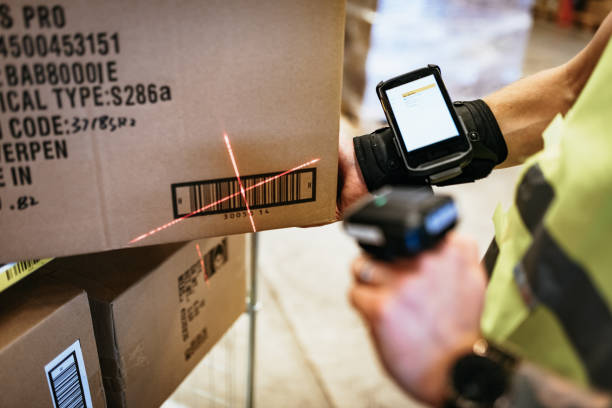
As digital identification expands across industries, barcode scanning has become deeply embedded in everyday operations. From smart retail shelves to medical diagnostics and industrial automation, scanning technology must now fit into smaller devices without losing reliability. Therefore, the question no longer focuses on whether barcode engines can shrink. Instead, the real challenge asks how small a barcode engine can become without sacrificing performance.
Miniature barcode reading engines represent the convergence of optical engineering, image processing, and embedded system design. Although early scanners required large housings and mechanical components, modern engines operate inside compact spaces while delivering fast and accurate decoding. This transformation did not happen by chance. It resulted from continuous advances in sensor technology, processing efficiency, and optical miniaturization.
Understanding these tradeoffs requires examining size reduction from a product performance perspective. Only then can designers evaluate how compact a barcode engine can become while still meeting real-world application demands.
Why Size Reduction Matters in Modern Barcode Applications
Device miniaturization has reshaped product expectations across nearly every industry. Handheld terminals, wearable devices, smart kiosks, and medical instruments all demand compact components. As a result, barcode engines must now integrate seamlessly into limited internal volumes.
Sin embargo, size reduction serves more than aesthetics. Smaller engines reduce power consumption, improve thermal efficiency, and enable flexible product design. For OEM developers, miniature barcode reading engines unlock new form factors that were previously impossible. These benefits explain why compact barcode engines continue to gain market attention.
Nevertheless, shrinking size introduces technical constraints. Optical paths shorten, sensor dimensions decrease, and component spacing tightens. Each constraint influences scanning accuracy, depth of field, and motion tolerance. Therefore, engineers must balance physical limitations with performance requirements.
Core Components That Define Barcode Engine Size
A barcode engine consists of several tightly integrated subsystems. Each subsystem directly affects how small the engine can become.
The imaging sensor forms the foundation. Modern CMOS sensors allow high resolution within minimal footprints. As pixel density increases, sensors shrink without losing image clarity. This advancement enables compact engines to capture detailed barcode images even in constrained spaces.
The optical system follows closely. Lenses, apertures, and illumination sources must align precisely. Miniaturization reduces focal length, which influences depth of field. Engineers compensate by refining lens coatings and optimizing optical geometry.
Processing hardware also plays a decisive role. Efficient decoding algorithms now run on low-power microcontrollers or embedded processors. Because processing speed improves with each generation, miniature barcode reading engines can decode complex symbologies without large computing modules.
Finally, illumination systems define scanning reliability. LEDs must deliver consistent brightness while occupying minimal space. Modern light management techniques distribute illumination evenly across the scanning field, even within compact housings.
 Performance Metrics That Cannot Be Compromised
Size alone does not define a successful barcode engine. Performance remains the primary requirement. Decoding speed stands first. A professional barcode engine must process images instantly to support real-time workflows. Even as engines shrink, decoding latency must remain negligible.
Accuracy follows closely. Miniature barcode reading engines must read damaged, de baja contraste, or poorly printed barcodes. Reduced optical paths can increase noise, yet advanced algorithms now compensate effectively. Depth of field also matters. Compact engines still need to scan at varying distances. Engineers balance sensor sensitivity with lens design to preserve usable depth ranges.
Motion tolerance remains critical in handheld applications. As users move devices during scanning, engines must decode barcodes without blur. High frame rates and intelligent exposure control support this requirement.
Finally, power efficiency ensures reliable operation in battery-powered devices. Smaller engines often operate under strict power budgets. Optimized electronics and illumination timing minimize consumption without reducing performance.
The Engineering Tradeoffs Behind Miniaturization
Reducing size introduces unavoidable tradeoffs. Understanding these tradeoffs explains why barcode engines cannot shrink indefinitely.
Optical constraints appear first. Shorter focal lengths reduce depth of field. To counter this, engineers use higher sensitivity sensors and refined lens profiles. These improvements preserve scanning flexibility within compact designs.
Thermal management also becomes more complex. Dense component layouts generate heat. Efficient power control and low-heat components prevent thermal noise from degrading image quality.
Signal processing challenges increase as sensor sizes decrease. Smaller pixels capture less light. Advanced noise reduction algorithms and adaptive exposure techniques compensate for this limitation.
Mechanical stability also matters. Miniature barcode reading engines require precise alignment. Even small shifts affect optical accuracy. Manufacturers use rigid frames and advanced assembly techniques to ensure long-term stability.
How Advanced Algorithms Enable Smaller Barcode Engines
Software plays an increasingly important role in size reduction. Intelligent decoding algorithms now compensate for hardware limitations.
Modern engines analyze image patterns dynamically. They adjust exposure, gain, and focus parameters in real time. This adaptability allows compact engines to read barcodes under diverse lighting conditions. Machine vision techniques further enhance decoding accuracy. Edge detection, contrast enhancement, and pattern recognition improve reliability when physical optics reach their limits.
Because processing power continues to increase while hardware shrinks, miniature barcode reading engines rely more heavily on software optimization. This shift allows performance to scale without expanding physical dimensions.
Application Scenarios That Define Minimum Practical Size
Different industries impose different size thresholds.
In wearable devices, barcode engines must fit into extremely limited spaces. Sin embargo, scanning distances remain short, which relaxes optical requirements. Compact engines thrive in this environment.
Medical devices require precision and reliability. Miniature barcode reading engines used in diagnostics must decode tiny labels accurately. Size reduction remains possible, yet performance tolerances remain strict.
Industrial automation demands durability. Engines must withstand vibration and dust. Although size reduction continues, mechanical robustness sets practical limits.
Retail kiosks and self-checkout terminals favor slim designs. Compact engines enable elegant layouts while maintaining fast throughput.
These scenarios demonstrate that minimum size depends on application context rather than theoretical limits alone.
 Reliability and Longevity in Compact Barcode Engines
Long-term reliability remains essential. Miniature barcode reading engines must perform consistently over millions of scans.
Component quality determines lifespan. High-grade sensors, stable illumination sources, and robust electronics reduce failure rates. Compact designs must avoid thermal stress that accelerates degradation.
Environmental resistance also matters. Engines used in logistics or healthcare face dust, humedad, and temperature variations. Protective coatings and sealed housings preserve reliability without increasing size.
Manufacturers also test compact engines under accelerated aging conditions. These tests validate performance stability across time, ensuring that size reduction does not compromise durability.
Integration Advantages for OEM and Embedded Systems
Compact barcode engines simplify system integration. Smaller footprints reduce PCB complexity and allow flexible placement within devices.
Standardized interfaces further ease integration. USB, UART, and SPI support ensure compatibility with various host systems. Power requirements also remain modest, simplifying battery design.
Miniature barcode reading engines enable modular product development. Designers can reuse engines across multiple platforms, accelerating time to market.
Because performance remains consistent across sizes, OEMs gain freedom without sacrificing reliability.
How Small Is Too Small?
Despite advancements, physical limits exist.
Below a certain size, optical paths become too short to maintain adequate depth of field. Illumination uniformity suffers. Thermal noise increases. At this point, performance degradation becomes unavoidable.
Sin embargo, current miniature barcode reading engines already reach impressive compactness while meeting professional standards. Ongoing innovation continues to push these limits gradually.
Instead of asking how small an engine can be in theory, designers should ask how small it can be for a specific application without compromising performance expectations.
Conclusión: Balancing Size and Performance with Precision
Miniature barcode reading engines represent a sophisticated balance between engineering constraints and performance demands. Size reduction enables new device designs, improves energy efficiency, and supports modern embedded applications. Sin embargo, performance cannot be compromised.
Through advanced optics, efficient processing, intelligent algorithms, and precise manufacturing, compact barcode engines now deliver professional-grade reliability. While physical limits still exist, innovation continues to push boundaries responsibly.
Ultimately, the best barcode engine size depends on application needs rather than absolute dimensions. When design prioritizes performance first, miniaturization becomes a powerful advantage rather than a limitation.








Deja una respuesta