
In der sich schnell entwickelnden Industrielandschaft von heute, Dabei spielt die Barcode-Scan-Technologie eine entscheidende Rolle. An der Spitze dieser Entwicklung stehen Barcodescanner mit automatischer Erkennung. These devices streamline operations, enhance accuracy, and improve data collection efficiency. Understanding the differences between 1D and 2D scanning technologies is critical for businesses looking to optimize workflows and maintain a competitive advantage.
 The Basics of Barcode Scanning
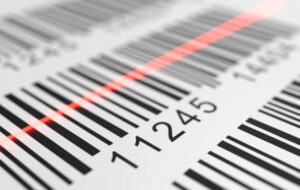
Barcode scanners serve as data input devices that translate visual information into digital signals. They are integral to supply chain management, Einzelhandel, and healthcare. 1D barcodes consist of linear patterns of varying widths. Each line encodes specific numeric or alphanumeric data. In contrast, 2D barcodes encode information both horizontally and vertically. QR codes and Data Matrix symbols are common 2D formats.
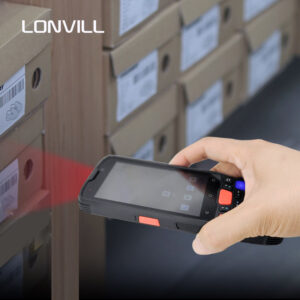
The distinction in data representation significantly impacts scanning performance. 1D scanners rely on laser technology to read codes. These lasers detect the contrast between dark bars and light spaces. While highly effective for simple codes, they are limited in data density and orientation flexibility. Auto-sensing 1D scanners can detect the presence of a barcode without manual activation. This automation improves throughput in high-volume environments.
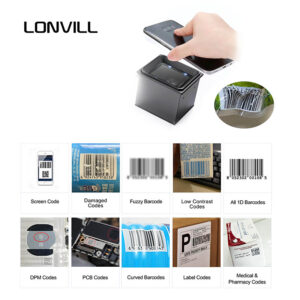
2D scanners, on the other hand, use imaging technology. They capture the entire code as a visual image. Advanced algorithms then decode the information. Unlike 1D codes, 2D codes store more complex data, including URLs, batch numbers, and embedded text. Auto-sensing 2D scanners can instantly recognize codes of varying sizes and orientations. This capability is essential for industrial applications where efficiency and accuracy are paramount.
Speed and Accuracy: The Role of Auto Sensing Modules
Auto-sensing technology enhances both speed and accuracy. Traditional scanners require manual triggering. Operators must align the scanner precisely with the code. Auto-sensing modules eliminate this step, activating the scan automatically when a code enters the reading field. This feature reduces operational delays and minimizes human error.
For 1D barcodes, auto-sensing modules improve reading consistency. They adjust exposure and laser intensity dynamically. This adaptability ensures codes are read correctly even under poor lighting or on damaged surfaces. In high-volume retail or warehouse settings, these features are indispensable. Each millisecond saved contributes to overall operational efficiency.
In 2D scanning, auto-sensing modules offer additional advantages. 2D barcodes can be printed in small sizes or on reflective surfaces. Imaging scanners with auto-sensing capabilities adjust focus and illumination automatically. This ensures rapid and accurate reading regardless of orientation. Außerdem, 2D scanners capture more information per scan. The combination of auto-sensing and imaging technology significantly reduces scanning errors, improves inventory accuracy, and enhances traceability.
Industrial Applications and Use Cases
The choice between 1D and 2D scanners depends on specific industry requirements. Retail environments often use 1D barcodes for pricing and inventory management. Auto-sensing 1D scanners increase checkout speed and reduce queue times. In healthcare, 2D barcodes are common on medication labels and patient wristbands. Auto-sensing 2D scanners ensure patient safety by accurately linking records to the correct individual.
Manufacturing and logistics benefit significantly from 2D scanning. Components, pallets, and containers often bear high-density codes. Auto-sensing 2D scanners streamline tracking and quality control processes. Zusätzlich, these scanners can capture codes in various orientations, which reduces the need for manual handling. This flexibility enhances operational efficiency and reduces labor costs.

Technical Considerations in Scanner Selection
When selecting a scanner, businesses must evaluate several technical factors. First, consider the environment. Staub, moisture, and temperature fluctuations affect scanner performance. Many industrial-grade auto-sensing barcode scanners are rated IP65 or higher for dust and water resistance. Second, consider code density. High-density 2D codes require imaging scanners with superior resolution. Third, connectivity options are essential. Modern scanners often support USB, RS232, and wireless interfaces for seamless integration with existing systems.
Software compatibility is another crucial consideration. Auto-sensing scanners rely on firmware and decoding algorithms to process data efficiently. Updates and maintenance ensure long-term performance and adaptability to evolving code standards. Enterprises should select scanners that support flexible software solutions to future-proof their operations.
Integrating Auto Sensing Scanners into Workflows
Integrating auto-sensing barcode scanners into existing workflows requires careful planning. First, mapping the scanning area ensures optimal placement for automatic detection. Scanners must be positioned to minimize occlusion and maximize the field of view. Second, calibrating sensitivity and trigger thresholds prevents false readings. Auto-sensing modules should detect actual codes without reacting to irrelevant movements. Third, staff training is essential. Operators must understand scanner behavior and troubleshoot minor issues.
Integration also extends to software systems. Enterprise resource planning (ERP) and warehouse management systems (WMS) often require direct data input from scanners. Auto-sensing scanners can streamline this process by providing real-time data updates. This integration enhances inventory accuracy, reduces manual data entry, and enables faster decision-making.
Future Trends in Auto Sensing Barcode Technology
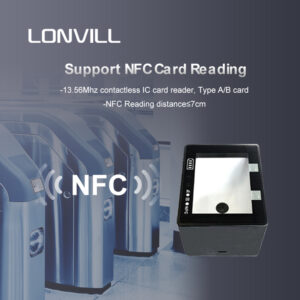
The future of auto-sensing barcode scanners is promising. Artificial intelligence and machine learning are increasingly applied to decoding algorithms. These advancements enable scanners to adapt to new code types and degraded labels. Enhanced image processing allows faster and more accurate recognition. Zusätzlich, multi-modal scanning, combining 1D, 2D, and RFID technologies, is emerging. This hybrid approach provides unparalleled versatility for complex industrial operations.
Cloud-based management and IoT integration are also key trends. Auto-sensing scanners connected to cloud systems offer centralized monitoring, analytics, and predictive maintenance. This connectivity enables businesses to optimize scanner placement, monitor usage patterns, and anticipate potential failures. The combination of auto-sensing technology and cloud connectivity represents a significant step forward in industrial automation.
Summary and Strategic Implications
Zusammenfassend, the differences between 1D and 2D barcode scanners are profound. 1D scanners excel in simplicity and speed for linear codes. 2D scanners provide high-density data capture and orientation flexibility. Auto-sensing technology enhances both types by eliminating manual triggers, reducing errors, and increasing throughput. Industrial applications benefit from these advancements in retail, Gesundheitspflege, Herstellung, and logistics.
Businesses must consider environmental factors, code density, Konnektivität, and software integration when selecting scanners. Proper planning and integration maximize operational efficiency and ensure long-term scalability. Emerging technologies such as AI, cloud connectivity, and hybrid scanning systems will further enhance auto-sensing barcode scanners’ capabilities.
For enterprises aiming to maintain a competitive advantage, investing in advanced auto-sensing barcode scanners is essential. By understanding the nuanced differences between 1D and 2D technologies, decision-makers can implement solutions that improve accuracy, Geschwindigkeit, and overall workflow efficiency. The strategic adoption of these devices ensures that data capture operations remain robust, zuverlässig, and future-proof.
Abschluss
Auto-sensing barcode scanners represent a vital tool in modern industrial operations. Their ability to read 1D and 2D codes accurately and efficiently transforms data management processes. By integrating these scanners into workflows, businesses achieve higher productivity, improved accuracy, and enhanced traceability. As technology evolves, auto-sensing scanners will continue to provide critical advantages across multiple industries.
Choosing the right scanner requires careful analysis of operational requirements, technical specifications, and integration needs. Investing in auto-sensing technology ensures that businesses stay ahead in a competitive environment, optimizing both current and future operations. The evolution from 1D to 2D scanning, coupled with auto-sensing capabilities, illustrates the ongoing transformation of industrial automation and data capture strategies.




Hinterlasse eine Antwort