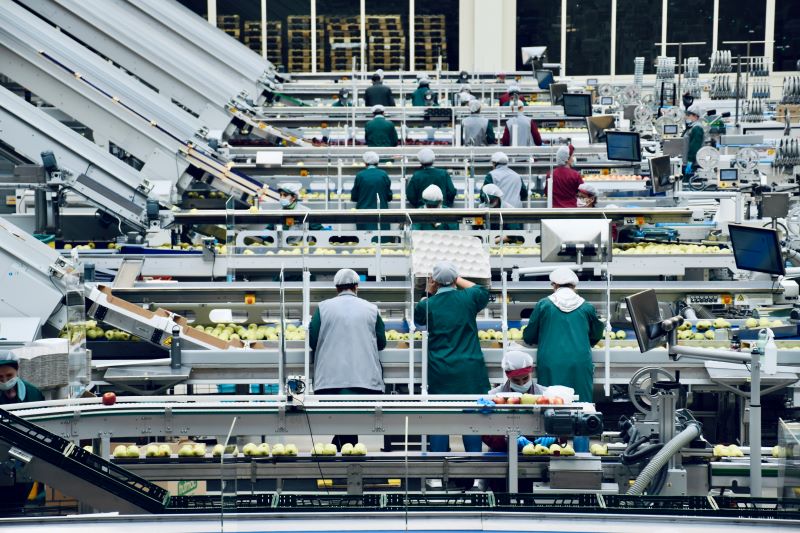
Industrial automation is evolving rapidly, and the need for accurate, adaptable, and durable scanning solutions has never been greater. Across manufacturing, logistics, pharmaceuticals, and consumer goods, companies rely on scanning technology to ensure efficiency, safety, and traceability. In this context, production-line integrated scanning modules play a critical role, as they are designed to meet demanding requirements for speed, accuracy, and environmental resistance.
Modern enterprises no longer accept one-size-fits-all scanning systems. Instead, they demand customized scanning modules tailored to their workflows, product dimensions, and regulatory frameworks. Whether adjusting scan speed, recognition distance, or housing materials, these modules are engineered to optimize both productivity and reliability. This trend toward customization reflects the broader shift toward smart manufacturing, where every component is expected to deliver precision performance under unique conditions.
The Importance of Customization in Industrial Scanning
The diversity of industries that rely on production-line integrated scanning explains the growing emphasis on customization. For example, high-speed beverage bottling plants require scanners that can read codes within milliseconds, while electronics assembly lines need scanners with extreme accuracy for tiny barcodes. Customization allows each application to benefit from targeted performance rather than generic capability.
Moreover, production environments differ widely in terms of temperature, lighting, vibration, and dust exposure. Without modules designed for these conditions, scanning errors or downtime become inevitable. As a result, customization is not merely a convenience but a necessity for ensuring stable and efficient operation.
Beyond functionality, customization also enhances long-term value. Scanning modules tailored to a production line minimize integration challenges, reduce maintenance costs, and extend service life. In turn, this enables enterprises to achieve smoother workflows and stronger return on investment.
 Scanning Speed: Meeting the Demands of High Throughput
One of the most common customization requests concerns scanning speed. Industries with high-volume output, such as packaging, pharmaceuticals, or logistics, require scanners that process hundreds of items per minute without error.
Custom production-line integrated scanning modules achieve this by optimizing both hardware and software. High-performance sensors, combined with advanced decoding algorithms, enable instantaneous recognition. At the same time, modules can be configured to adjust their processing rate according to conveyor belt speeds, ensuring consistency even when production fluctuates.
Speed customization also has strategic implications. When scanners keep pace with automated lines, they eliminate bottlenecks and safeguard product traceability. This not only supports productivity but also ensures compliance with safety and quality standards across industries.
Recognition Distance: Adapting to Different Product Profiles
Recognition distance is another crucial factor in scanning customization. Some production lines require close-range scanning for precision, while others need long-range detection to accommodate larger items or irregular workflows.
For instance, warehouses handling bulky goods may need scanners capable of reading codes from a distance of several meters. Conversely, microelectronics production requires scanners with fine focus that can capture tiny 2D codes within millimeters.
Production-line integrated scanning modules address these needs through adjustable optics and sensor configurations. By calibrating the recognition distance, they achieve optimal performance for diverse product types without compromising accuracy. This flexibility allows businesses to adopt a single scanning solution for multiple applications, reducing complexity and cost.
Environmental Resistance: Ensuring Reliability in Harsh Conditions
Industrial environments often expose scanning modules to dust, humidity, vibration, or chemical contact. Standard devices rarely withstand such conditions for long. Consequently, durability has become a central driver in the customization of scanning modules.
Manufacturers increasingly demand modules with reinforced housings, sealed optics, and heat-resistant components. High IP-rated designs protect against moisture and particulate intrusion, while shock-resistant builds ensure stability under constant vibration.
By combining these features with advanced cooling systems, production-line integrated scanning modules maintain reliable performance in extreme conditions. This resilience not only reduces downtime but also supports industries such as food processing, pharmaceuticals, and heavy manufacturing, where operational continuity is critical.
Integration with Smart Manufacturing Systems
Customization also extends to integration with broader automation frameworks. Today’s production lines are data-driven ecosystems where sensors, conveyors, and robots work together seamlessly. Scanning modules must align with this digital infrastructure, supporting real-time communication and analytics.
Customized modules often include interfaces compatible with multiple protocols such as Ethernet/IP, Modbus, or PROFINET. They also support integration with manufacturing execution systems (MES) and enterprise resource planning (ERP) platforms. This connectivity enables manufacturers to track products at every stage and use scanning data for predictive analytics and process optimization.
Furthermore, customization can include built-in diagnostic tools, ensuring that scanners self-monitor and provide alerts before performance declines. This proactive functionality reduces maintenance costs and enhances reliability across the production lifecycle.
Market Drivers Behind Customization
Several market dynamics explain why customization of scanning modules is accelerating. First, the growth of e-commerce and global supply chains has increased the need for reliable product traceability. Second, stricter regulatory standards in sectors such as pharmaceuticals demand precise data capture. Finally, Industry 4.0 trends underscore the value of modular, adaptive technology that evolves in response to changing production needs.
Consumers also indirectly influence this demand. As buyers expect faster deliveries, better quality assurance, and transparent sourcing, manufacturers must invest in production-line integrated scanning solutions that deliver consistent results. Customization is therefore not only a technical requirement but also a response to broader economic pressures.
The Strategic Advantage of Customized Solutions
For enterprises, adopting customized scanning modules provides a clear strategic advantage. By aligning technology with specific production needs, companies minimize inefficiencies and maximize throughput. At the same time, customization ensures future scalability, allowing systems to adapt as production lines evolve.
Moreover, customized production-line integrated scanning enhances brand credibility. Clients and partners recognize the investment in reliability and precision, reinforcing trust in the company’s operational excellence. This reputation for quality often translates into stronger customer relationships and competitive positioning.
Conclusion
The evolution of scanning technology reflects the growing demand for precision, adaptability, and durability in industrial automation. Production-line integrated scanning modules exemplify this trend, offering tailored performance in speed, recognition distance, and environmental resilience.
Customization transforms these modules into more than tools—they become strategic assets that sustain efficiency and reliability across diverse industries. By integrating seamlessly with smart manufacturing systems, they also support broader goals of transparency and predictive control.
For companies seeking to remain competitive, investing in customized scanning solutions is no longer optional. It represents a commitment to operational excellence, innovation, and long-term value creation. LONVILL, with its expertise in fixed 2D and barcode scanning modules, is uniquely positioned to deliver these tailored solutions, ensuring that each production line achieves peak performance in today’s demanding industrial landscape.




Leave a reply